.svg "DELMIC")
@2x(1).png?width=132&height=36&name=Delmic_Black+Blue(preferred)@2x(1).png "Delmic_Black+Blue(preferred)@2x(1)")


.png)


The "real" side of the lab
While academic papers usually focus on the final results, METEOR Connect 2026 was designed to explore the "real" side of the lab. We organized this event because our commitment to customers spans from sale to result; we love seeing METEOR in active use and listening closely to our community.
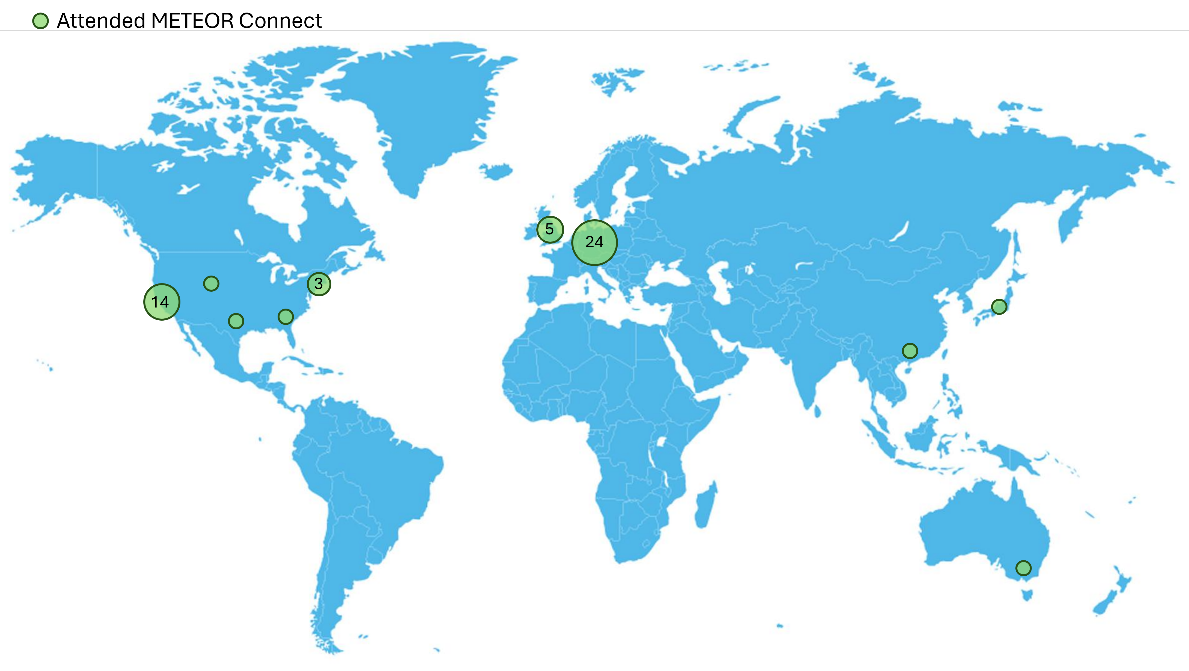
Instead of just discussing biology, we dove deep into technical breakthroughs, troubleshooting, and the secret shortcuts that streamline daily lab life. With over 50 attendees from a pool of 80+ registrants, the event brought together a global mix of daily users, facility managers, and future users from across Europe, North America, and Asia.
Here are the top 5 lessons we learned from the global METEOR community:
1. Integration is the key to throughput
The transition from standalone fluorescence systems to an integrated solution represents a fundamental shift in imaging efficiency rather than a mere convenience. Leanne de Jager (Utrecht University) highlighted that the integrated METEOR microscope provides three critical operational advantages:
- Increased throughput
- Cleaner lamellae
- Easier correlations
2. Start at the foundation: strategic grid preparations
Optimizing the workflow begins during the sample preparation phase, well before touching the microscope. Kevin Boga (Forschungszentrum Jülich) highlights that utilizing micropatterned grids is a critical optimization step. This approach ensures a homogenous cellular distribution, enabling the rapid identification and registration of regions of interest.
3. Hardware-software synergy: achieving one-click correlation
The efficiency of a correlative workflow depends on the synergy between hardware and software. Maya Azubel (SLAC) highlighted the Odemis interface's "one-click" correlation capabilities. This seamless transition between SEM and fluorescence images ensures that regions of interest remain perfectly localized, eliminating the manual complexity of re-finding the target in SEM.
4. Enhancing correlation precision with reflection imaging
The correlation of fluorescence microscopy (FM) data with transmission electron microscopy (TEM) images is often a bottleneck because the FM images lack structural context regarding the lamella’s architecture. Kevin Boga shared his pro-tip to streamline this integration: the acquisition of reflection images of the finalized lamella. This technical approach makes the final alignment between FM and TEM significantly more accurate and less time-consuming.
5. Advancing science through a collaborative ecosystem
The final lesson is that world-class science isn't just about the hardware; it’s about the support behind it. Maia Azubel noted that the installation, service, and application support provided by the Delmic team were instrumental to her. She emphasized that the value of the partnership lies in a team that "really listens" to user needs to help them overcome unique lab challenges.
Impact that matters
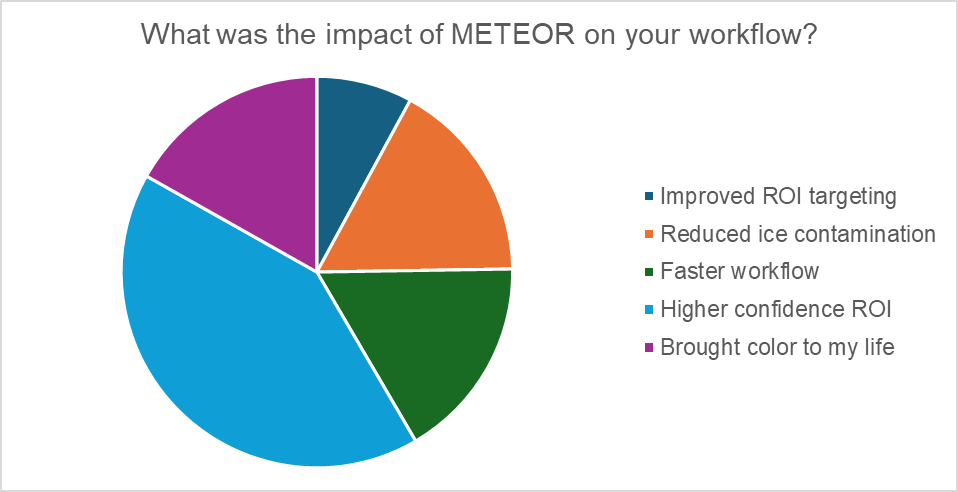
When we polled our community, the results were clear: METEOR is delivering more than just data. Users reported higher confidence in ROI targeting, faster workflows, and reduced ice contamination. For many, the ability to see clearly through the process meant that METEOR quite literally "brought color to life".
Want to join the conversation? The METEOR community is growing fast, and if we learned one thing from this event, it is this: we will continue to organize these sessions to ensure our users get the results they need.
To stay updated on the latest technical tips and future events, follow us on LinkedIn and sign up for our cryo-ET newsletter:
